
As discussions begin on how to salvage the circuit's layout for future editions, opinions from the wider motorsport community are flooded with radical proposals. However, many suggestions put forward by fans and former drivers ignore the physical layout restrictions of the IFEMA area and the millions already poured into permanent track facilities. Moving massive grandstands or redesigning entire sectors from scratch is financially and logistically impossible.
The Promise and Problem of La Monumental
At the heart of the circuit's identity lies its most striking feature: the heavily banked La Monumental turn. With its steep banking, it possesses incredible potential to create high-speed drama and dynamic racing lines. Unfortunately, safety-driven modifications made to the sections immediately preceding this monumental corner have choked the flow of the track.
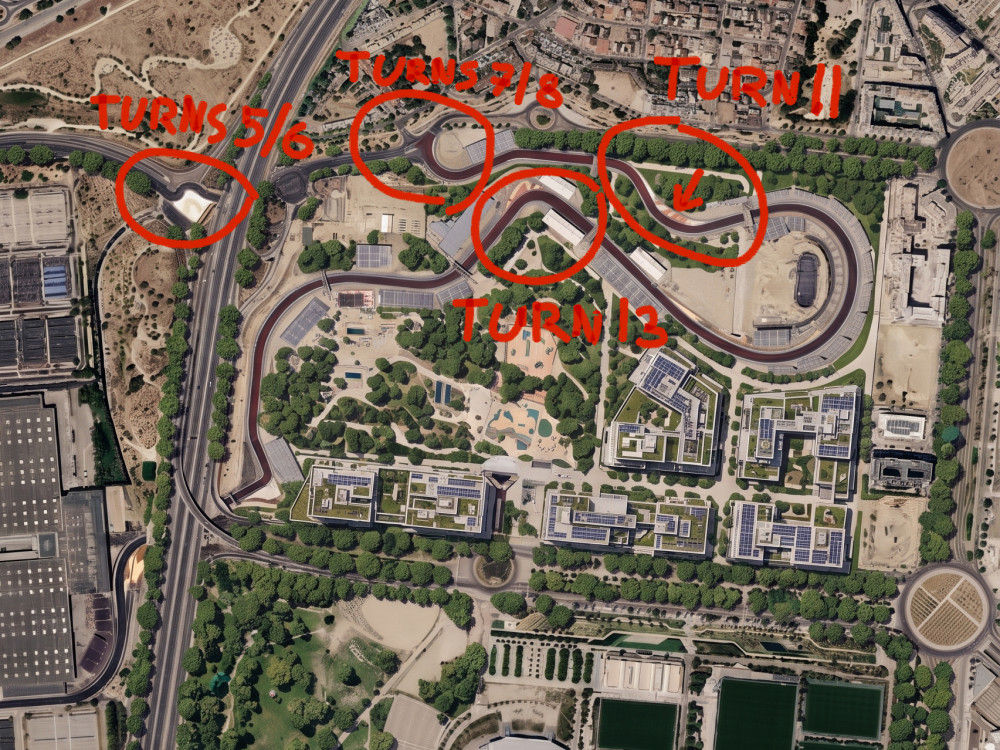
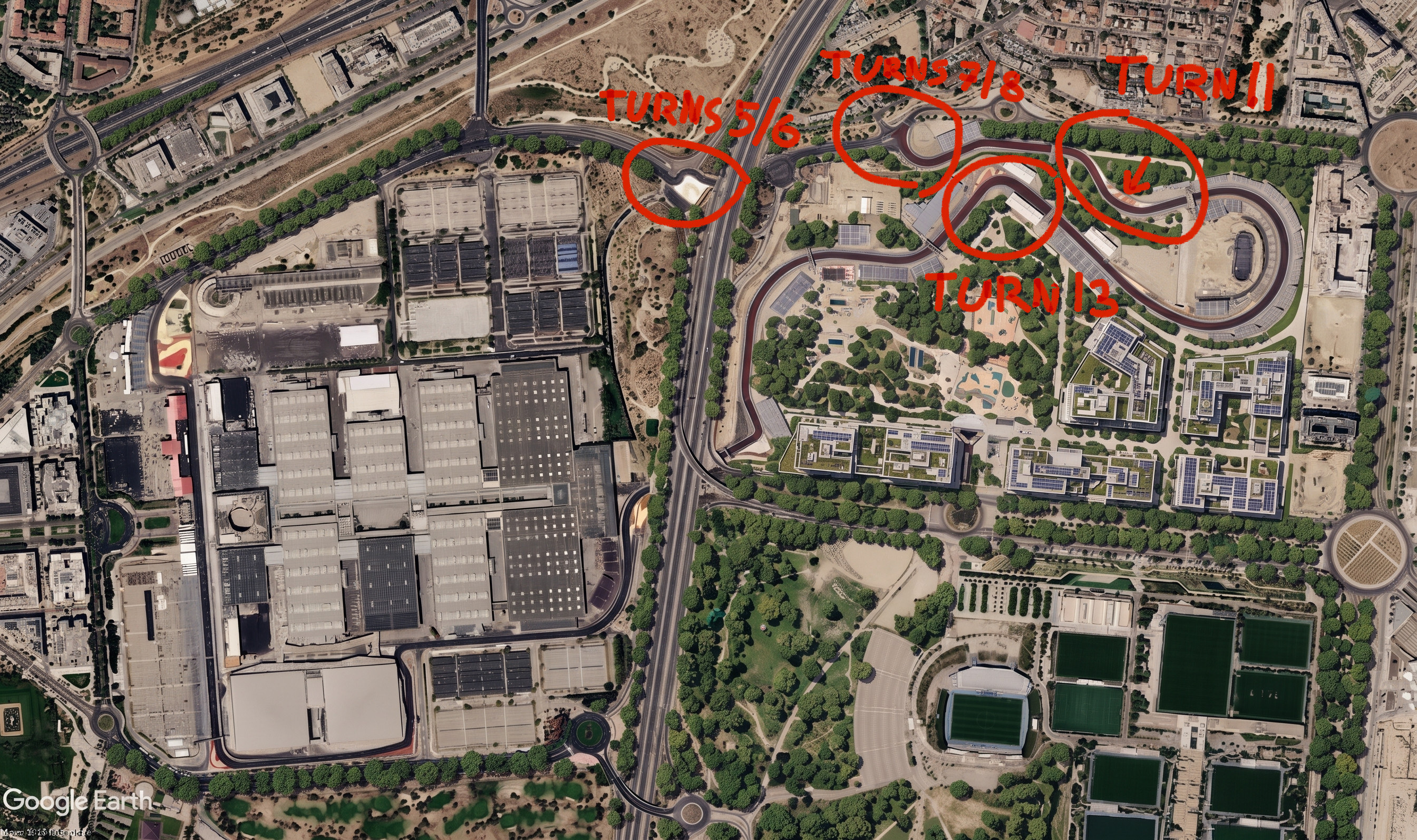
If you watched the relentless pressure Lando Norris applied to Max Verstappen during the closing laps of the Spanish GP, the core layout issue became glaringly obvious. Norris was able to stick within striking distance of Verstappen right from the start of the lap, navigating the opening sequence and pulling close coming into the complex chicane at Turns 5, 5a, and 6. Yet, the geometry of this chicane makes defensive driving far too comfortable, completely neutralizing attacking momentum.
Exiting that chicane, Norris was again able to hug the gearbox of the Red Bull, but the subsequent straight leading to the second chicane (Turns 7 and 8) is far too short to orchestrate a late-braking lunge. Even so, the trailing car managed to maintain a tight gap through that sequence, bringing us directly to the primary bottleneck of the lap: the combination of Turns 10 and 11.
The Turn 11 Bottleneck
Turn 11 was added late to the original layout proposal purely to bleed off speed for safety reasons ahead of La Monumental. While that safety precaution is understandable, the corner itself is a race-ruining obstacle.
Because Turn 11 is a mid-speed corner, it forces modern Formula 1 cars to rely heavily on aerodynamic downforce to maintain cornering velocity. Dirty air wreaks havoc here; following closely is practically impossible. Norris routinely lost significant time through this single corner, allowing the gap to Verstappen to widen permanently. By the time they cleared La Monumental, the chasing car was entirely out of attacking range for Turn 13.
Realistic and Cost-Effective Solutions
Fixing the Madring does not require tearing up the entire district, but it does require targeted surgical changes to a few specific corners. Organizers have already indicated a willingness to act, meaning the following realistic adjustments should be prioritized:
- Turn 5/5a/6 Chicane: The entry needs to be physically widened. It must become punishing for a defender who tries to squeeze the inside line, giving a distinct advantage to the driver behind who commits to the proper racing line.
- Turns 7/8 Chicane: A slightly wider entry here would allow a driver carrying momentum from the previous section a genuine window to attempt a late-braking surprise.
- Turn 11 (The Key Fix): This section must be reprofiled into a slower corner. Lowering the minimum speed reduces dependence on clean aerodynamic downforce, enabling cars to follow each other tightly and arrive at La Monumental with multiple attacking trajectories open.
- Turn 13: Already flagged by circuit bosses for revision, this corner requires careful re-engineering. Because the banked La Monumental acts essentially as a high-speed straight where a following car can close right up, even a short approach should theoretically offer an attack window. However, the real issue is that Turn 13 itself is currently too fast, meaning it does not demand heavy enough braking to punish defensive mistakes or allow cleanly executed passing maneuvers.
Without fixing Turn 11, any other modification will amount to mere cosmetic window dressing because cars will continue to spread out before La Monumental. If organizers execute these targeted tweaks responsibly, the Madring can finally transform into the vibrant, overtaking-friendly circuit it was always meant to be.