
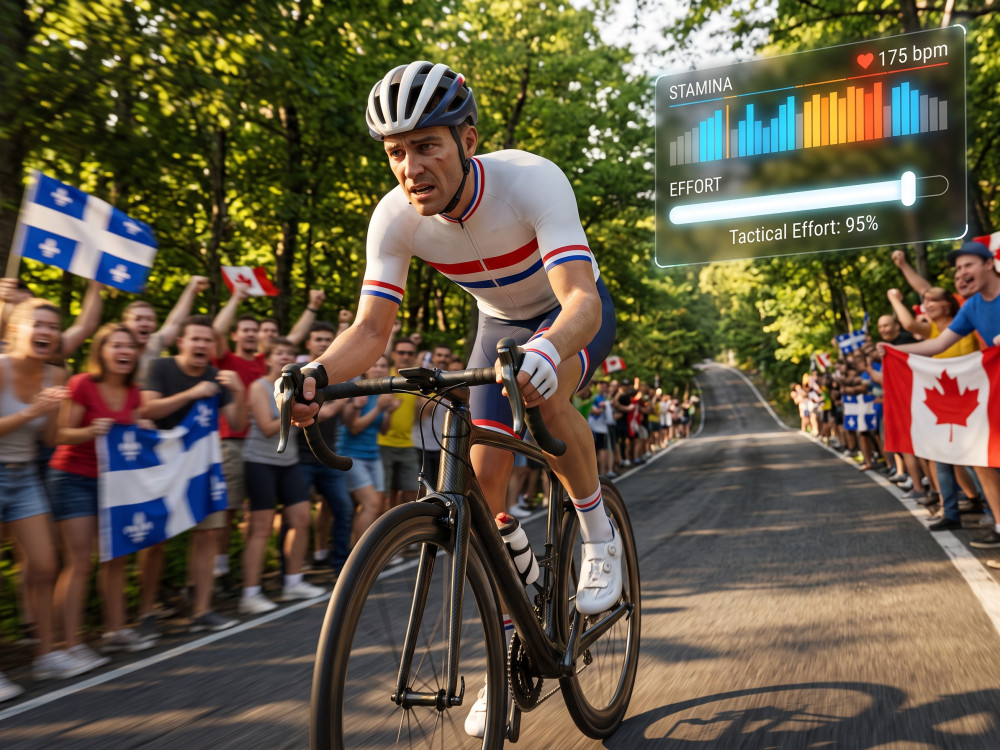
The Montréal Blueprint: Real-World Routes Demanding Strategic Perfection
The 2026 UCI Road World Championships road race route in Montréal centers on a demanding 13.4-kilometer circuit around Mount Royal. Featuring the repeated punishment of the Voie Camillien-Houde climb (2.3 kilometers at an average 6.2% gradient) paired with the sharp pitches of Chemin de la Polytechnique, riders face over 3,800 meters of vertical gain across 273 kilometers.
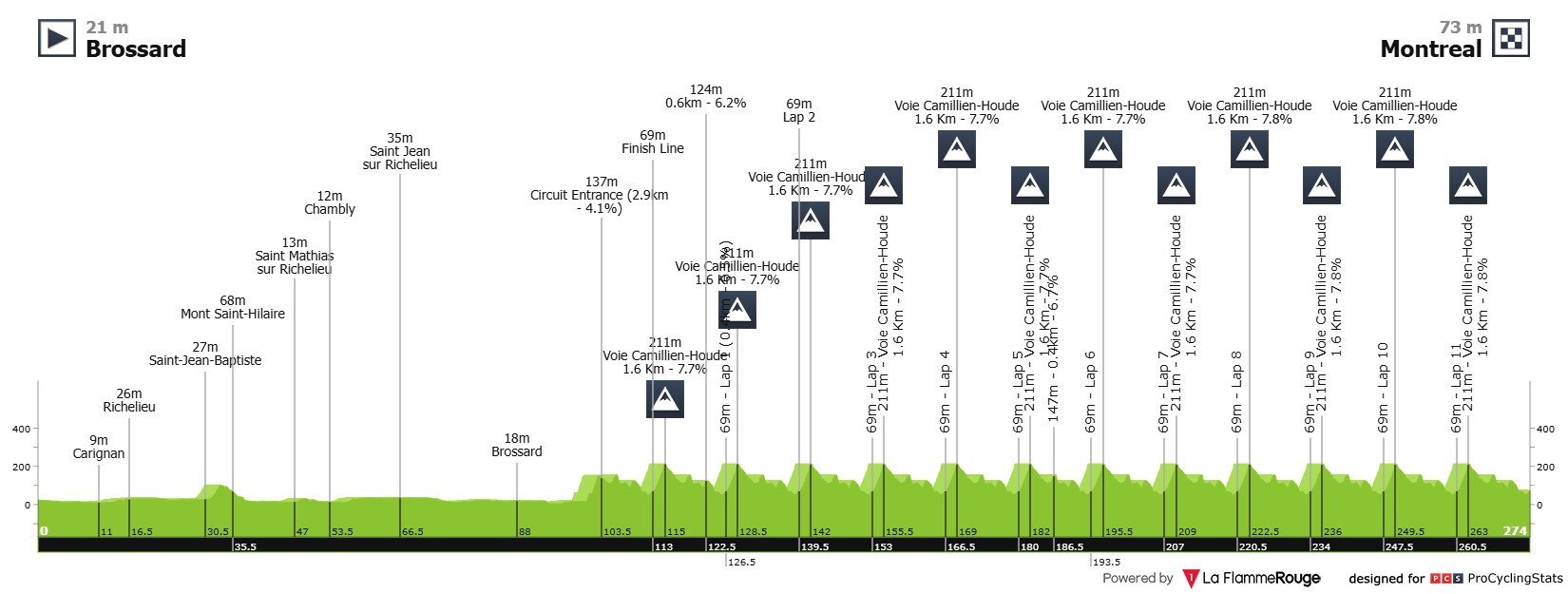
In management titles, this specific profile creates a tactical dilemma. You cannot rely on pure sprinters who will collapse under the cumulative elevation, nor can you rely solely on lightweight high-mountain climbers who lack the punch to win on the false-flat sprint along Avenue du Parc. Your chosen leader must be a high-end puncher (puncheur) or a versatile classic rider supported by a squad tailored to regulate the tempo over seven hours of virtual racing.
Deep-Dive PC Mechanics: Managing Micro-Curves in Pro Cycling Manager
In full 3D career simulations like Pro Cycling Manager, achieving a 100% Fitness Peak for a single-day event is an exercise in reverse scheduling. The game's engine builds a fitness peak meter over an eight-week window prior to the targeted objective.
To optimize your team leader for the World Championship course, structure your lead-up using three core rules:
- The Pre-Objective Reset: Ensure your rider finishes their prior target (such as the Vuelta a España or late-summer classics) with enough time to clear their fatigue bar. Attempting to chain a World Championship peak directly off a Grand Tour without a dedicated rest period leads to rapid overtraining.
- Race Day Calibration: Target between 7 and 10 competitive race days during the eight-week preparation window. Skipping prep races leaves rider sharpness low, while over-racing burns through condition before race day.
- Altitude Camps: Schedule a targeted preparation training camp approximately 20 to 30 days out. This adds direct points to the fitness meter while elevating baseline stamina.
If scheduled correctly, your rider hits 100% fitness form on race morning, granting maximum stat bonuses to resistance and stamina during the final laps.
Browser-Based Strategy: Mastering Velo Manager, Cycling for Fun, and cycling4freaks
While 3D PC titles focus on visual preparation, browser-based management games test your mathematical discipline through daily tick updates, scheduled attribute gains, and micro-energy management.
Velo Manager
In Velo Manager, long-term planning dictates one-day success. Riders possess distinct daily energy decay rates and specialized attribute curves. Training schedules must be adjusted weeks in advance to balance Hill and Sprint attributes without draining overall freshness. Entering a high-difficulty one-day race with low freshness penalizes your rider's core stats during the crucial final 30 kilometers.
Cycling for Fun
Cycling for Fun forces managers to handle equipment choice, specialized setups, and granular race orders. Winning a hilly World Championship circuit requires setting dynamic energy thresholds: conserving energy during the opening 180 kilometers, keeping pace in position up to 230 kilometers, and unleashing 85-90% effort for counter-attacks on the final climbs.
Managers who burn energy early trying to chase insignificant breakaway groups leave their leaders vulnerable when the AI ramps up the pace on the final climb.
cycling4freaks
In cycling4freaks, success relies on grid mechanics and tactical order triggers. The platform's turn-based or daily calculated simulations test your ability to match rider profiles to race elevation profiles. Winning single-day events requires spending training points specifically on explosive acceleration and stamina endurance, ensuring your rider has the energy reserves needed to trigger a decisive late-game attack.
The One-Day Tactical Masterclass: Executing the Race Plan
Whether running a real-time 3D simulation or calculating text-based browser turns, victory on a course like Montréal comes down to race-day discipline.
Assign two dedicated domestiques to guard your main leader from the start, reducing aerodynamic drag and energy consumption over the opening 200 kilometers. Ignore early breakaway groups formed by non-contenders and let rival AI teams handle the pacing work. On the penultimate lap of the primary ascent, instruct your secondary climber to set a hard tempo to isolate opposing sprinters. Finally, save your leader's peak effort bar for the final steep ramp, launching a decisive attack just before the crest to maintain speed down the descent to the finish line.